

If you're wondering how long a sprained ankle takes to heal, you're probably frustrated, sidelined, and worried it's something serious. We understand, and you're far from alone. A 2025 study published in Orthopedics found that U.S. emergency departments treated about 7.4 million ankle sprains between 2010 and 2024.
The good news is that mild sprains usually heal in a week or two, while a complete ligament tear can take up to several months. In this guide, we'll break down healing timelines by grade, walk you through the recovery stages, and explain why feeling better isn't the same as being fully healed.
What Happens When You Sprain Your Ankle
A sprain happens when the ligaments that hold your ankle bones together stretch too far and tear. It often happens when you roll or twist your ankle, land awkwardly after a jump, or slip and fall. A sprain differs from a fracture (a broken bone), though both can cause similar symptoms.
Common signs of a sprained ankle include:
- Pain, especially when you put weight on the foot
- Tenderness when you touch the ankle
- Swelling and bruising around the joint
- Instability, or a feeling that the ankle might give way
- Reduced range of motion in the ankle
The severity of the ligament damage plays a big role in recovery time. That's why understanding your sprain's grade matters so much.
The Three Grades of Ankle Sprains and Their Recovery Timelines

Providers grade sprains by the amount of ligament damage. Grades 1, 2, and 3 reflect increasing severity, each with a different recovery window. Here are typical timelines from Harvard Health Publishing:
| Grade | Severity | Typical Recovery Time |
|---|---|---|
| Grade 1 | Mild (stretching, no tear) | 1–3 weeks |
| Grade 2 | Moderate (partial tear) | 3–6 weeks |
| Grade 3 | Severe (complete tear) | Up to several months |
An accurate diagnosis sets a realistic timeline and shapes your treatment. Let's look at each grade.
Grade 1
A Grade 1 sprain involves slight stretching and microscopic tears in the ligament fibers. You'll typically have mild tenderness and swelling, little to no pain when bearing weight, and no instability.
Mild ankle sprain recovery time typically spans one to three weeks. Even then, gentle movement and mobility exercises can help prevent lasting stiffness.
Grade 2
A Grade 2 sprain means the ligament is partially torn. You'll likely have moderate tenderness, swelling, and bruising, mild pain when you put weight on the ankle, and slight instability.
Healing typically takes three to six weeks. A walking boot or brace may protect the ligament early on, and guided rehab helps restore strength and balance before you return to activity.
Grade 3
A Grade 3 sprain involves a complete ligament tear. Expect significant tenderness and swelling, severe pain with weight-bearing, and marked instability.
About 90% of ankle sprains are inversion injuries that affect the ligaments on the outer side of the ankle, according to OrthoInfo. These are known as lateral ankle sprains. Severe lateral ankle sprain recovery time can span several months.
Surgery is rare, even for Grade 3 tears, but may be considered if pain and instability persist after months of rehab. A thorough evaluation helps determine the right path forward.
Week-by-Week Ankle Sprain Recovery Timeline
Every sprain heals on its own schedule, but recovery often follows a predictable progression.
- First 1–3 days: Protect and calm swelling. Swelling and pain typically last two to three days. If pain and swelling are severe, rest the ankle as much as possible for the first 24 to 48 hours.
- Weeks 1–2: Restore motion. You can usually start range-of-motion exercises within 48 to 72 hours, starting while seated. Early moves may include ankle flexes and tracing the alphabet with your big toe.
- Weeks 3–4: Stretch and strengthen. Calf stretches and heel raises help rebuild flexibility and strength.
- Later stages: Rebuild balance and return to activity. Balance and endurance training come next, followed by a gradual return to sports, starting with straight-line activities before cutting and pivoting.
Overall, rehab takes about two weeks for minor sprains and six to 12 weeks for more severe injuries, according to OrthoInfo.
Factors That Affect How Fast a Sprained Ankle Heals
Two people with the same grade of sprain can heal at different rates. Your outcome depends on:
- Severity: Higher-grade sprains naturally take longer to recover.
- Other injuries: Damage to cartilage, tendons, or nearby structures can complicate healing.
- Adherence to rehab: Consistently following your exercise plan makes a real difference.
- Timing of your return: Going back to activity before the ligament heals can lead to repeat sprains.
That's why a one-size-fits-all approach rarely works. An individualized, multi-specialty treatment plan accounts for your unique situation.
Why Pain Relief Doesn't Mean Your Ankle Is Fully Healed
As the pain fades, you assume the injury is behind you. But feeling better and being fully healed aren't the same thing. Wait until your provider says it's safe to return to sports, since putting too much pressure on an unhealed ankle can worsen a sprain.
Returning too soon can also lead to repeat sprains, ongoing pain, and chronic instability. In fact, a 2025 review in Frontiers in Surgery reported that about 20% of people with an acute ankle sprain go on to develop chronic ankle instability.
That's why completing rehab matters. Incomplete rehab is a common cause of chronic instability, so keep up your strength and balance work even after the pain is gone.
Sprained Ankle Treatment and Rehabilitation Options
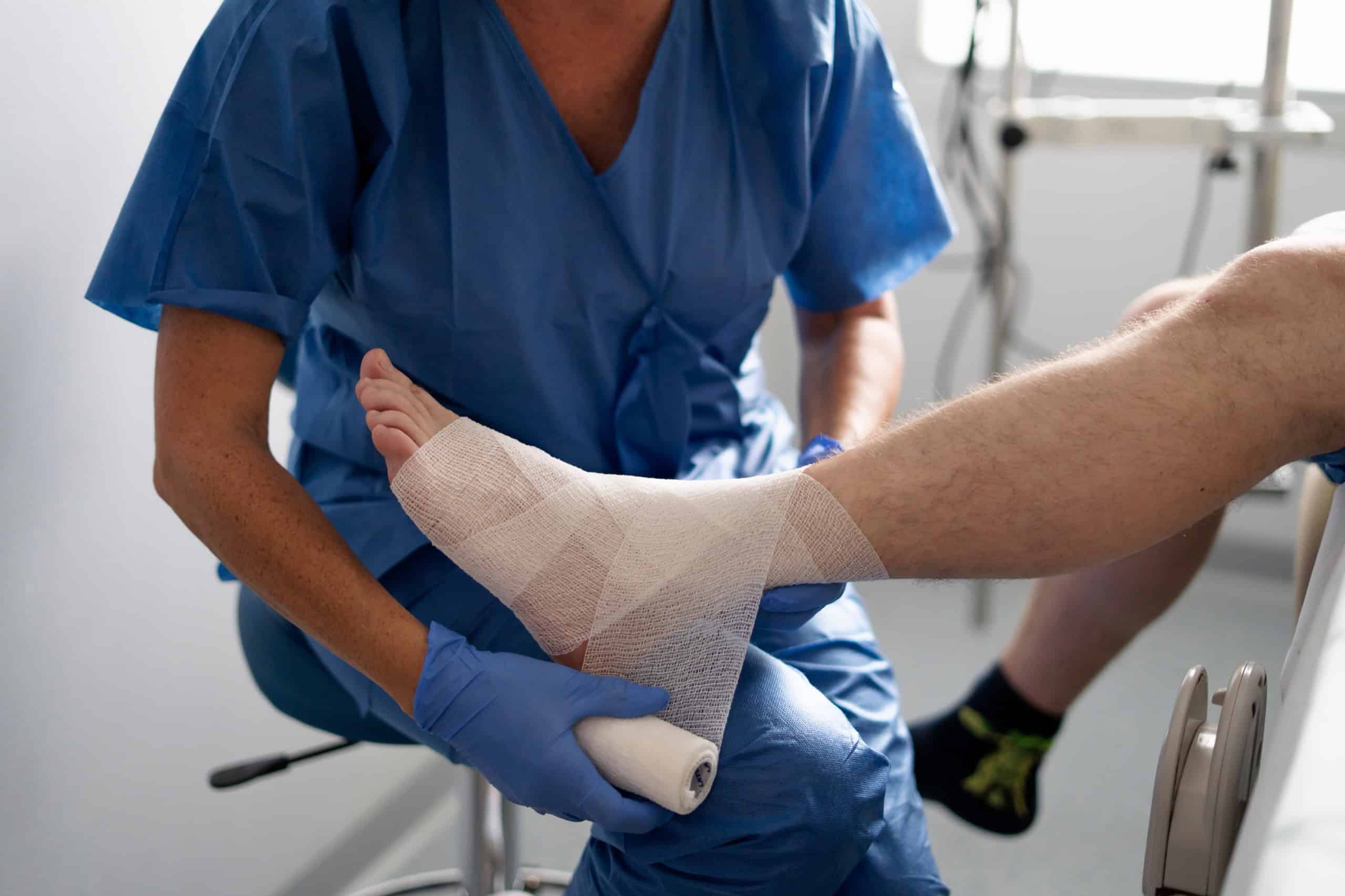
In the first days after a sprain, the rest, ice, compression, and elevation (RICE) method is a common starting point.
- Rest: Avoid walking on the ankle or returning to sports.
- Ice: Apply for 20 to 30 minutes, three to four times a day, with the ice wrapped in a towel.
- Compression: Use a bandage or elastic wrap to help control swelling.
- Elevation: Keep the ankle above heart level as often as possible, especially in the first 48 hours.
That said, prolonged rest isn't the goal. According to Harvard Health Publishing, studies show that people return to normal activities sooner with functional treatment and movement supported by a brace, tape, or bandage than with immobilization, such as a cast.
Physical therapy is central to recovery. Rehab focuses on range of motion, strengthening, and balance training. Depending on your needs, your plan may also include services like therapeutic ultrasound and balance therapy.
At NorthEast Spine and Sports Medicine, our integrated, multi-specialty team combines physical therapy, chiropractic care, and sports medicine into one coordinated plan. That means we tailor your recovery to your injury, not a generic checklist.
When to See a Doctor

Some mild sprains heal well at home, but certain signs mean you should get evaluated. See a provider if you notice:
- You can't bear weight on the ankle.
- Pain and swelling haven't improved, or have gotten worse, a day or two after the injury.
- You are experiencing severe pain or swelling, or numbness in the foot or ankle.
- You haven’t improved after two to four weeks of home care.
Severe sprains can look like fractures, so an X-ray may be needed to rule out a broken bone. Please don't try to self-diagnose or wait it out.
If any of these apply to you, call us at 732-653-1000 or book an evaluation. We're here to help you heal safely.
How to Prevent Future Sprains
Once your ankle heals, a few habits may help keep it strong and steady:
- Do balance exercises: Regular balance work builds stability and strength.
- Wear proper footwear: Choose well-fitting shoes designed for your activity.
- Warm up: Prepare your body before exercise or sports.
- Brace or tape as needed: Extra support helps if your ankle is weak or has been previously injured.
- Watch your step: Take extra care on uneven surfaces.
Prevention is part of healing. Protecting your ankle now helps keep you active and may lower your risk of ankle pain down the road.
Your Next Steps Toward a Fully Healed Ankle

Recovery time depends on your sprain's grade, from one to three weeks for mild injuries to several months for severe ones. Pain often fades before healing is complete, so finishing your rehab matters.
You don't have to navigate this alone. Our multi-specialty team at NorthEast Spine and Sports Medicine, with sports medicine, physical therapy, and chiropractic care, builds a personalized recovery plan to help you heal and stay active. Our team provides care at 11 locations across New Jersey.
Call 732-653-1000 or schedule an appointment online.
